QMPlay2 is a practical desktop player when one application needs to handle local media, internet streams, YouTube links, and codec-heavy files without a larger media suite. You can install QMPlay2 on Ubuntu with the tomtomtom Launchpad PPA on Ubuntu 24.04 (noble) and 22.04 (jammy), or use the Flathub package on Ubuntu 26.04 (resolute), 24.04, or 22.04.
Install QMPlay2 on Ubuntu
Choose the QMPlay2 Installation Method on Ubuntu
Choose the package source that matches your Ubuntu release and update preference before running install commands.
Ubuntu 26.04 users should choose Flatpak because the PPA currently has no resolute Release file. Upstream also publishes a Linux AppImage through QMPlay2 releases on GitHub, but it is only a download reference here instead of a full method because the PPA and Flathub workflows provide managed update and removal paths.
| Method | Release Scope | Package Source | Update Path | Best Fit |
|---|---|---|---|---|
| APT PPA | Ubuntu 24.04 and 22.04 | tomtomtom PPA | Updates through APT | APT package integration and desktop launchers |
| Flatpak | Ubuntu 26.04, 24.04, and 22.04 | Flathub | Flatpak updates | Cross-release coverage or existing Flathub workflows |
The Flathub package currently matches the upstream application release but does not show a verified-publisher marker on Flathub. Its permissions include normal desktop media access, including home, removable media, audio, display, network, and PipeWire-related paths, so keep that scope in mind when package permissions affect your method choice.
Install QMPlay2 with the PPA on Ubuntu
Use the PPA on Ubuntu 24.04 or 22.04 when you want QMPlay2 managed through APT and the standard application menu. Ubuntu 26.04 should skip this method because APT cannot use the PPA without a resolute repository.
Refresh Ubuntu Package Metadata Before Installing QMPlay2
Refresh the package index first so APT works with current repository metadata.
sudo apt updateIf you are signing in with a fresh non-admin account, first add a new user to sudoers on Ubuntu or switch to an account that already has
sudo.
Add the QMPlay2 PPA on Supported Ubuntu Releases
Add the PPA with a codename guard so unsupported releases do not write a broken APT source. The command adds the PPA only on noble or jammy; on resolute, it prints a Flatpak fallback message instead.
. /etc/os-release

case "$VERSION_CODENAME" in
  noble|jammy)
    sudo add-apt-repository ppa:tomtomtom/qmplay2 -y
    ;;
  *)
    printf 'Use Flatpak on %s; the QMPlay2 PPA does not publish this suite.\n' "$VERSION_CODENAME"
    ;;
esac
Refresh APT once more so you can confirm Ubuntu is reading the Launchpad source.
sudo apt updateOn Ubuntu 24.04, the relevant APT update line should include the noble Launchpad source:
https://ppa.launchpadcontent.net/tomtomtom/qmplay2/ubuntu noble InRelease
Ubuntu 22.04 shows jammy instead of noble.
Install QMPlay2 from the PPA on Ubuntu
Install the APT package after the PPA is available.
sudo apt install -y qmplay2Verify the APT QMPlay2 Installation on Ubuntu
Check the installed package state to confirm QMPlay2 came from the PPA.
apt-cache policy qmplay2On Ubuntu 24.04, the current PPA package state looks like this:
qmplay2:
  Installed: 1:25.09.11-1~ppa~noble
  Candidate: 1:25.09.11-1~ppa~noble
  Version table:
 *** 1:25.09.11-1~ppa~noble 500
        500 https://ppa.launchpadcontent.net/tomtomtom/qmplay2/ubuntu noble/main amd64 Packages
        100 /var/lib/dpkg/status
Ubuntu 22.04 shows the same version string with a ~ppa~jammy suffix. The package also adds the lowercase qmplay2 command to your PATH and the QMPlay2 desktop launchers under /usr/share/applications/.
Install QMPlay2 with Flatpak on Ubuntu
Use the Flathub build on Ubuntu 26.04, or choose it on Ubuntu 24.04 or 22.04 if you already manage desktop applications through Flatpak.
If Flatpak is not installed yet, first install Flatpak on Ubuntu. This workflow adds Flathub at system scope, so the install, update, and removal steps keep
sudothroughout.
Add Flathub for QMPlay2 on Ubuntu
Add the Flathub remote first. The --if-not-exists flag skips a duplicate-remote error if Flathub is already configured.
sudo flatpak remote-add --if-not-exists flathub https://dl.flathub.org/repo/flathub.flatpakrepoVerify the Flathub Remote on Ubuntu
Confirm that Flathub is available at system scope before you install the application.
flatpak remotes --columns=name,options | grep -E '^flathub[[:space:]]'The output should include a system-scope Flathub remote:
flathub system
Install QMPlay2 from Flathub on Ubuntu
Install QMPlay2 from Flathub with its application ID.
sudo flatpak install -y flathub io.github.zaps166.QMPlay2Verify the Flatpak QMPlay2 Installation on Ubuntu
Query the Flatpak metadata after the install so you can confirm the app ID, branch, version, and scope.
flatpak info io.github.zaps166.QMPlay2On Ubuntu 26.04, the relevant Flatpak metadata fields look like this:
          ID: io.github.zaps166.QMPlay2
         Ref: app/io.github.zaps166.QMPlay2/x86_64/stable
        Arch: x86_64
      Branch: stable
     Version: 25.09.11
      Origin: flathub
Installation: system
Launch QMPlay2 on Ubuntu
Both methods install correctly from the terminal, but QMPlay2 is still a desktop application and needs a logged-in graphical session for real playback. Without that session, the app may create its configuration directory but it will not provide a usable player window.
Launch QMPlay2 from the Terminal on Ubuntu
The PPA package adds the lowercase qmplay2 command to your PATH, while the Flatpak build keeps the full app ID launcher. Neither method creates a shortened qmplay command.
qmplay2For the Flatpak build, start it with:
flatpak run io.github.zaps166.QMPlay2Launch QMPlay2 from the Applications Menu on Ubuntu
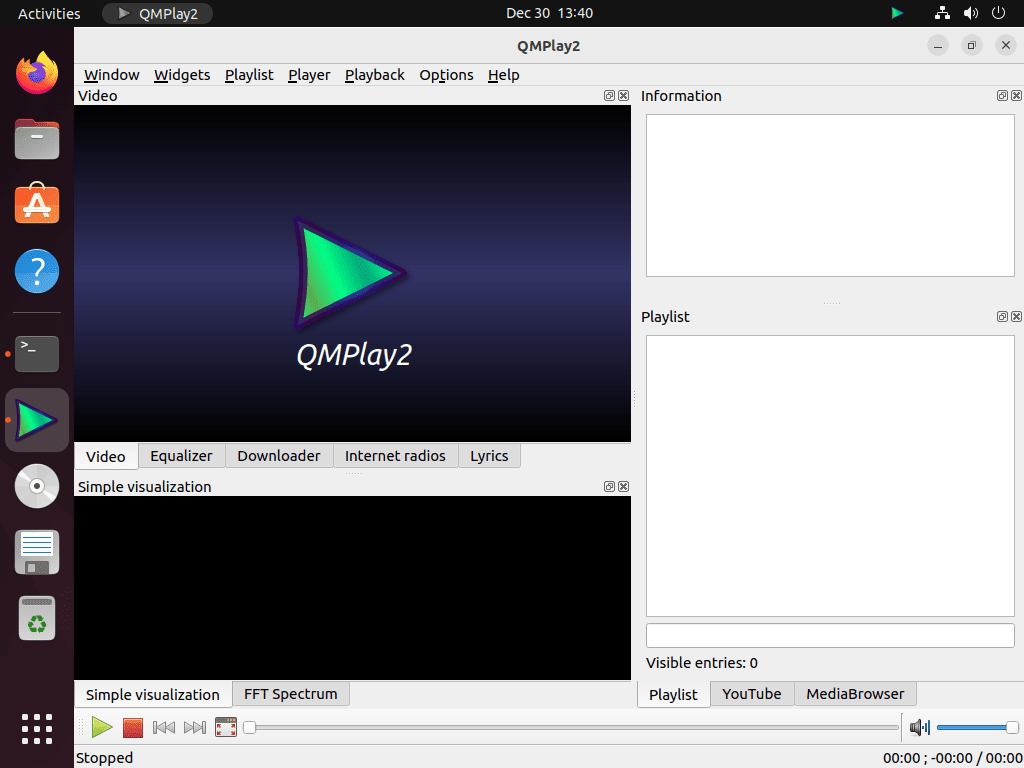
Open the desktop launcher when you want the normal graphical startup path.
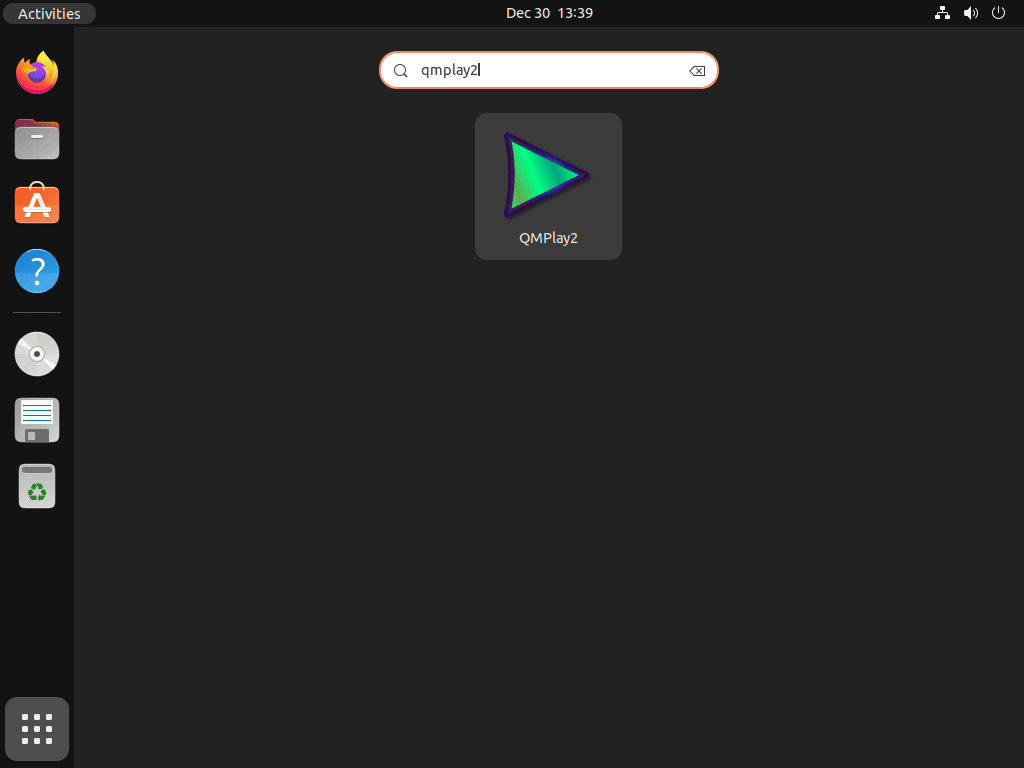
- Open the Activities overview in the top-left corner of the desktop.
- Click Show Applications, the grid icon at the bottom of the dock.
- Search for QMPlay2, then click the icon to open the player.
Update or Remove QMPlay2 on Ubuntu
Keep the update and removal commands at the same scope you used during installation.
Update the APT QMPlay2 Package on Ubuntu
Refresh the package lists, then upgrade only the QMPlay2 package.
sudo apt update && sudo apt install --only-upgrade qmplay2Update the Flatpak QMPlay2 Package on Ubuntu
Update the Flathub build with the same system scope used during installation.
sudo flatpak update io.github.zaps166.QMPlay2Remove the APT QMPlay2 Package on Ubuntu
Remove the package first, then confirm the installed package state before changing repository sources.
sudo apt remove -y qmplay2dpkg-query -W -f='${db:Status-Abbrev} ${binary:Package}\n' qmplay2 2>/dev/null | grep '^ii' || echo "qmplay2 is not installed"qmplay2 is not installed
Remove the PPA only if you no longer want QMPlay2 packages from that source.
sudo add-apt-repository --remove ppa:tomtomtom/qmplay2 -y
sudo apt update
Ubuntu 22.04 can leave the PPA key file behind after source removal. Remove these files only after the PPA source is gone.
sudo rm -f /etc/apt/trusted.gpg.d/tomtomtom-ubuntu-qmplay2.gpg /etc/apt/trusted.gpg.d/tomtomtom-ubuntu-qmplay2.gpg~After the PPA is gone, APT should show no remaining QMPlay2 candidate.
apt-cache policy qmplay2qmplay2: Installed: (none) Candidate: (none) Version table:
Preview dependency cleanup instead of removing packages blindly. Continue only if the package list contains items you no longer need.
sudo apt autoremove --dry-runsudo apt autoremoveTo wipe saved settings as well, remove
~/.config/QMPlay2. This permanently deletes playlists, preferences, and window state.
rm -rf ~/.config/QMPlay2Remove the Flatpak QMPlay2 Package on Ubuntu
Use the system-scope uninstall command if you installed QMPlay2 from Flathub with sudo.
sudo flatpak uninstall -y --delete-data io.github.zaps166.QMPlay2Confirm the Flatpak app is gone after the uninstall finishes.
flatpak list --app --columns=application | grep -Fx io.github.zaps166.QMPlay2 || echo "QMPlay2 Flatpak is not installed"The expected output is:
QMPlay2 Flatpak is not installed
After QMPlay2 has been launched at least once, the system-scope uninstall can still leave per-user data under
~/.var/app/io.github.zaps166.QMPlay2. Remove it manually only if you want to erase that profile as well.
rm -rf ~/.var/app/io.github.zaps166.QMPlay2Clean unused Flatpak runtimes separately so you can review the removal list before accepting it.
sudo flatpak uninstall --unusedTroubleshoot QMPlay2 on Ubuntu
Most QMPlay2 problems on Ubuntu come down to helper tools for online playback or the wrong audio backend inside the player.
Fix QMPlay2 YouTube Playback on Ubuntu
QMPlay2 uses yt-dlp for many YouTube playback paths. Ubuntu 24.04 installs it as a recommended package from the PPA path, while Ubuntu 22.04 may need it installed separately.
command -v yt-dlp || echo "yt-dlp not installed"If yt-dlp is installed, the command returns a path like this:
/usr/bin/yt-dlp
If the command prints yt-dlp not installed, add it with:
sudo apt install -y yt-dlpFor the Flatpak package, update the Flatpak app and runtime first because a host yt-dlp package does not automatically change what the Flatpak application can use.
sudo flatpak update io.github.zaps166.QMPlay2Fix QMPlay2 Audio Output on Ubuntu
When video plays but audio stays silent, change the audio backend inside QMPlay2 instead of reinstalling the whole package.
Open QMPlay2’s settings from the application menu, then check the playback module or audio output device. Ubuntu 26.04 and 24.04 desktop installs normally use PipeWire, while many Ubuntu 22.04 desktops still use PulseAudio, so choose the output that matches your active desktop audio stack.
Conclusion
QMPlay2 is ready on Ubuntu through the PPA where noble or jammy packages are available, or through Flathub on the supported releases covered here. For heavier all-format playback, install VLC media player on Ubuntu; for keyboard-first playback and scripting-friendly controls, install mpv media player on Ubuntu.


Formatting tips for your comment
You can use basic HTML to format your comment. Useful tags currently allowed in published comments:
<code>command</code>command<strong>bold</strong><em>italic</em><a href="https://example.com">link</a><blockquote>quote</blockquote>