GNOME Tweaks is useful when Debian’s GNOME Settings app does not expose a preference you need, such as font hinting, titlebar buttons, startup applications, theme controls, or other advanced GNOME desktop behavior. You can install GNOME Tweaks on Debian 13 (Trixie), Debian 12 (Bookworm), and Debian 11 (Bullseye) from the default APT repositories with the gnome-tweaks package.
GNOME Tweaks targets GNOME Shell sessions. If you use Xfce, KDE Plasma, Cinnamon, LXQt, or another desktop environment, use that desktop’s own settings tools instead. GNOME Tweaks is not published as a Flathub Flatpak; install the Debian package through APT.
Install GNOME Tweaks on Debian
Update the APT Package Index
Refresh APT metadata before installing GNOME Tweaks so Debian can resolve the current package candidate from enabled sources.
sudo apt updateThese commands use
sudofor package-management tasks that require root privileges. If your account cannot usesudo, see our Debian guide for adding a user to sudoers.
Install GNOME Tweaks with APT
Install the current Debian package with APT:
sudo apt install gnome-tweaksUse gnome-tweaks as the package name on all supported Debian releases. Debian 11 still exposes gnome-tweak-tool as a transitional package that depends on gnome-tweaks, but Debian 12 and Debian 13 no longer provide that older name.
| Debian Release | APT Package | Version Output | Package Name Note |
|---|---|---|---|
| Debian 13 (Trixie) | gnome-tweaks | 46.1 | Use gnome-tweaks; the legacy package name is unavailable. |
| Debian 12 (Bookworm) | gnome-tweaks | 42.beta | Use gnome-tweaks; the legacy package name is unavailable. |
| Debian 11 (Bullseye) | gnome-tweaks | 3.34.0 | gnome-tweak-tool is transitional and depends on gnome-tweaks. |
Verify GNOME Tweaks
Check that the installed command responds from your shell:
gnome-tweaks --versionOn Debian 13, the output resembles:
46.1
Debian 12 prints 42.beta, while Debian 11 prints 3.34.0. Those differences come from each release’s GNOME package set and do not change the APT install command.
Launch GNOME Tweaks on Debian
GNOME Tweaks installs the gnome-tweaks command and a desktop launcher named Tweaks.
Launch from Terminal
Start GNOME Tweaks from a terminal with:
gnome-tweaksThe graphical window opens in your current GNOME session. If the terminal stays attached, leave it open until the app is running.
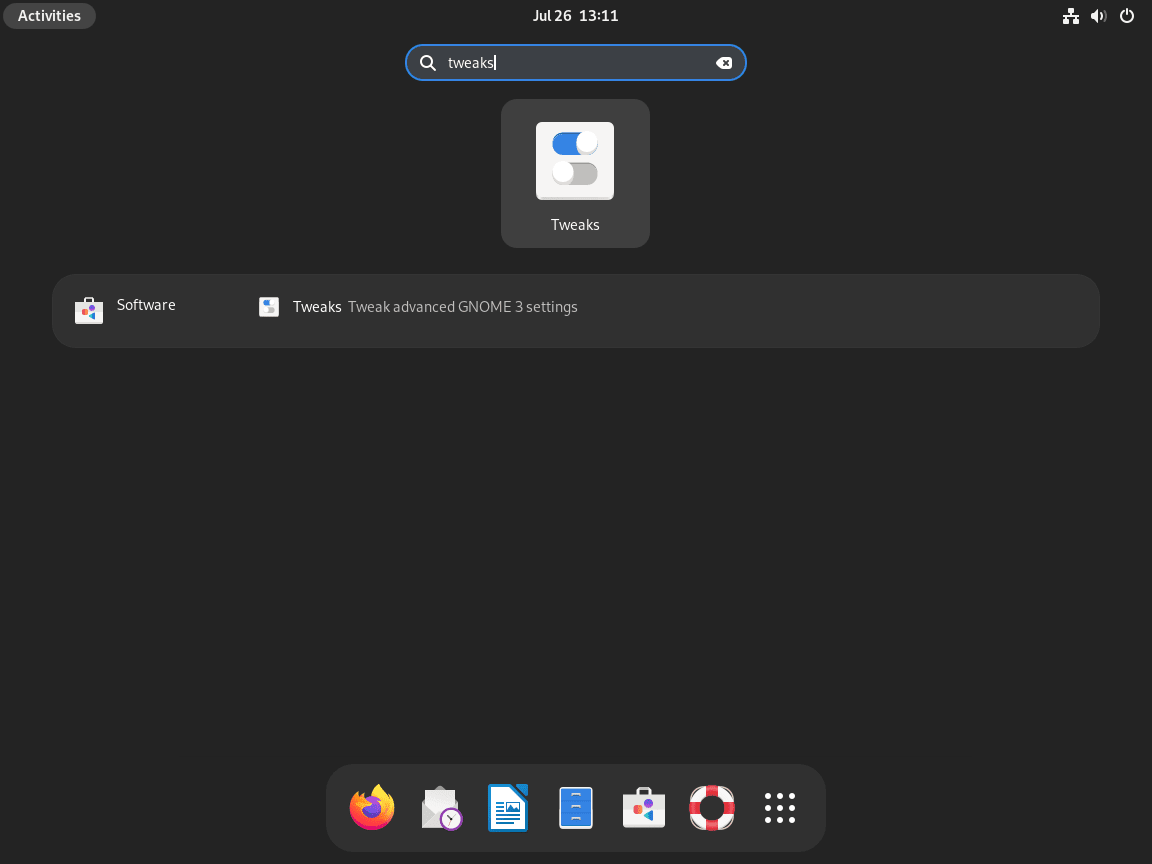
Launch from Activities
GNOME also registers Tweaks in the applications overview:
- Click Activities in the top-left corner.
- Type
Tweaksin the search field. - Click the Tweaks icon.
Customize Debian with GNOME Tweaks
GNOME Tweaks panels vary slightly by Debian release because each release ships a different GNOME version. The core workflow stays the same: open Tweaks, choose a category from the sidebar, change the setting, and log out and back in only when a setting or extension requires a new session.
Appearance and Themes
The Appearance panel controls supported theme-related settings, including icons, cursors, and legacy application theme options where available. You can install compatible themes from Debian packages or from GNOME Look, then select them from Tweaks. GNOME Shell theme selection requires the User Themes extension, with different package names on Debian 13 than on Debian 12 and 11.
Fonts
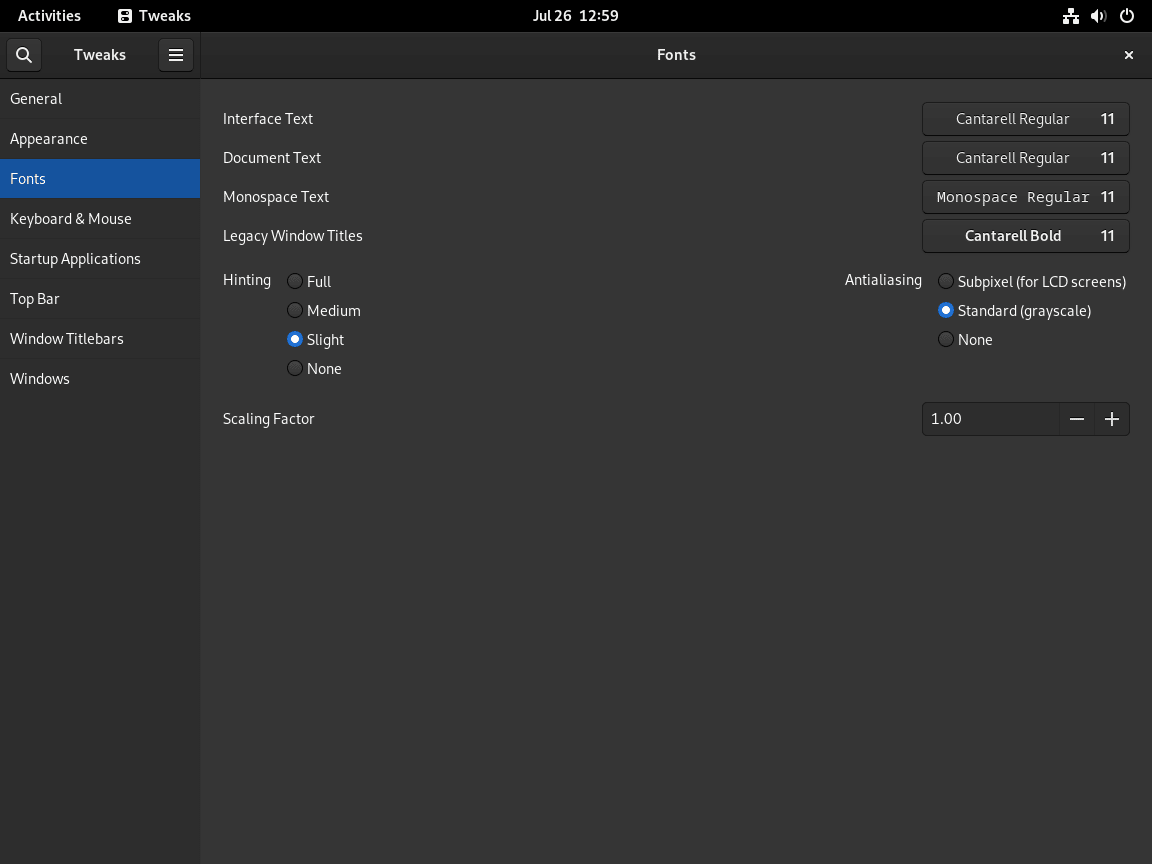
The Fonts panel controls interface text, document text, monospace text, font hinting, antialiasing, and scaling factor. To expand font choices before adjusting them in Tweaks, see our guide to installing Microsoft fonts on Debian.
Window Titlebars and Windows
Window-related panels expose behavior that GNOME Settings often hides, such as titlebar buttons, titlebar click actions, window focus mode, and placement behavior. Enable minimize or maximize buttons here if you prefer traditional window controls.
Keyboard and Mouse
Keyboard and mouse options cover pointer behavior, touchpad behavior, compose-key choices, and keyboard layout tweaks. The exact labels differ between the GNOME 3-era Tweaks package in Debian 11 and the newer GNOME Tweaks releases in Debian 12 and Debian 13.
Startup Applications
The Startup Applications panel adds or removes programs that start automatically after you sign in. Use it for graphical applications you want to launch with your desktop session, not for system services managed by systemd.
Top Bar and Release-Specific Panels
Debian 12 and Debian 11 GNOME Tweaks builds include additional panels such as Top Bar, which controls items like the Activities button, clock/calendar display, and battery percentage. Debian 13 ships a slimmer Tweaks interface, so panel names and available options do not match older releases exactly.
GNOME Shell Extensions
GNOME extension handling differs by release. Debian 11 includes an Extensions panel inside Tweaks, while newer GNOME releases handle most extension toggles through the separate Extensions utility when gnome-shell-extension-prefs is installed. For new extensions, use Debian packages or browse GNOME Shell Extensions; keep extension-specific compatibility separate from the Tweaks application itself.
GNOME Tweaks works in normal GNOME Wayland and GNOME on Xorg sessions. Individual third-party extensions can still have their own Wayland or Xorg limitations, so treat extension-specific behavior separately from the Tweaks application itself.
Update or Remove GNOME Tweaks on Debian
Update GNOME Tweaks
GNOME Tweaks updates through Debian’s normal APT package workflow. For a targeted package refresh, update APT metadata first, then upgrade only the installed Tweaks package:
sudo apt update
sudo apt install --only-upgrade gnome-tweaks
Remove GNOME Tweaks
Remove the Debian package when you no longer need the Tweaks application:
sudo apt remove gnome-tweaksIf APT lists packages that are no longer required, review the names before accepting an optional autoremove cleanup:
sudo apt autoremoveVerify that the installed package entry is gone:
dpkg -l gnome-tweaks | grep '^ii' || trueNo output means gnome-tweaks is no longer installed. If the command prints a line beginning with ii, the package is still installed.
If you installed the User Themes extension only for GNOME Tweaks shell themes, remove the matching package for your Debian release. Keep it installed if other extensions or users still depend on it.
Debian 13 (Trixie):
sudo apt remove gnome-shell-extension-user-themeDebian 12 (Bookworm) and Debian 11 (Bullseye):
sudo apt remove gnome-shell-extensionsTroubleshoot GNOME Tweaks on Debian
GNOME Tweaks Opens Outside GNOME or Does Not Apply Changes
GNOME Tweaks expects a GNOME desktop session. If the app opens but settings do not apply, confirm the current desktop session from a terminal inside your graphical login:
printf '%s\n' "$XDG_CURRENT_DESKTOP"A normal GNOME session should include GNOME in the output. If the output shows another desktop, such as KDE, XFCE, or LXQt, use that desktop’s configuration tools instead of GNOME Tweaks.
Shell Theme Option Is Unavailable
The Shell theme option depends on the User Themes extension. Debian 13 packages that extension separately:
sudo apt install gnome-shell-extension-user-themeDebian 12 and Debian 11 provide it through the broader GNOME Shell extensions package:
sudo apt install gnome-shell-extensionsAfter installation, log out and log back in. Enable the User Themes extension with GNOME’s Extensions utility or the Extensions panel where your Debian release exposes it, then return to Tweaks and select the shell theme.
Reset GNOME Tweaks Changes
Reset commands change settings for the current user account. They do not remove packages, but they can discard GNOME desktop and shell customizations you may want to keep.
The reset examples use dconf. If that command is missing, install the small CLI package that provides it:
sudo apt install dconf-cliThe dconf-cli package updates through APT and can remain installed because it provides a general GNOME settings command, not a Tweaks-only component.
Reset GNOME desktop preferences with:
dconf reset -f /org/gnome/desktop/Reset GNOME Shell preferences with:
dconf reset -f /org/gnome/shell/Log out and back in after resetting shell or desktop settings so GNOME reloads the changed preferences cleanly.
Conclusion
GNOME Tweaks gives Debian GNOME users a maintained APT-installed tool for advanced desktop preferences that sit outside the standard Settings app. After installation, start with Fonts, Appearance, Window Titlebars, and Startup Applications, then add the User Themes extension only if you need custom GNOME Shell themes.


Formatting tips for your comment
You can use basic HTML to format your comment. Useful tags currently allowed in published comments:
<code>command</code>command<strong>bold</strong><em>italic</em><a href="https://example.com">link</a><blockquote>quote</blockquote>