Linux file command guides - Page 3
Find files, inspect metadata, copy safely, archive or compress data, sync directories, and avoid destructive command mistakes.
Curated guides
File command guides
37 matched guides, best match first. Page 3 of 4.
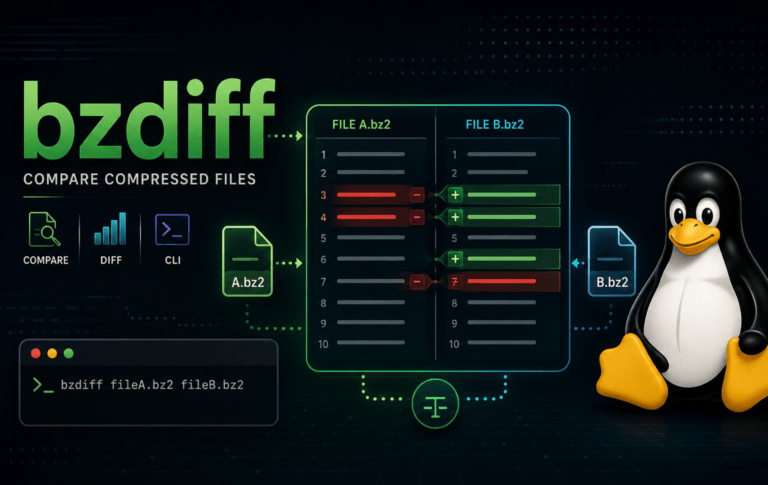
bzdiff Command in Linux with Examples
Comparing old log snapshots or configuration exports gets awkward when the files are still compressed with bzip2. The bzdiff command in Linux compares the decompressed content of .bz2...
Unzip a Directory in Linux: 10 Example Commands
Zip archives still show up everywhere, from project downloads and backups to file bundles shared across Windows and Linux systems. To unzip to another directory in Linux, use...

whereis Command in Linux with Examples
When a command exists in more than one place, or its documentation seems missing, the whereis command in Linux gives you a quick inventory of the binary, source,...

du Command in Linux (With Examples)
When a filesystem starts filling up, the du command in Linux tells you which directories and files are actually consuming space. It is useful for checking log growth,...
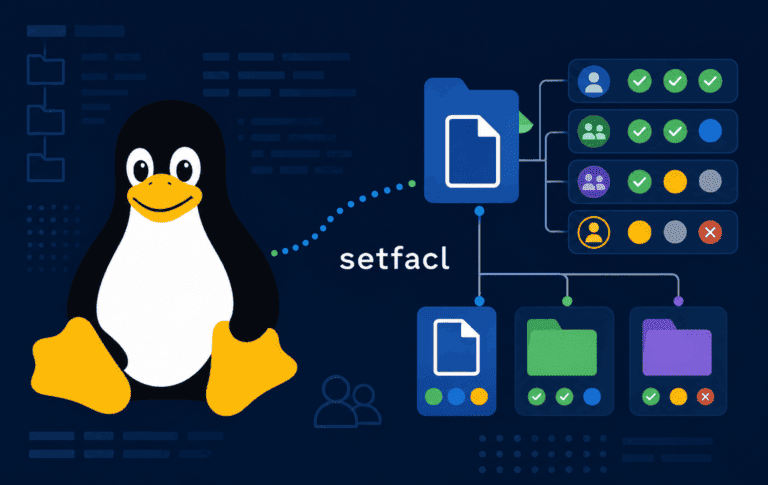
setfacl Command in Linux: ACL Permissions Examples
Shared directories get awkward when owner, group, and other permission bits are too blunt. The setfacl command in Linux lets you grant a specific user or group access...

mkdir Command in Linux with Examples
Directory setup gets repetitive fast when projects, logs, uploads, and backups all need predictable paths. The mkdir command in Linux creates those directories from the shell, whether you...

Linux mv Command: Move and Rename Files and Directories
The Linux mv command is short for move, but it also handles the everyday rename work that keeps files and directories organized from the terminal. Use it to...
rmdir Command in Linux (With Examples)
Empty directories often survive builds, downloads, archives, and cleanup scripts. The rmdir command in Linux removes only empty directories, so it gives you a safer first pass before...

chmod Command in Linux with Examples
Permission mistakes can quietly break deployments or expose private files, which is why the chmod command in Linux is worth understanding before you copy a recursive fix from...

which Command in Linux with Examples
PATH problems usually look simple until two copies of the same tool exist on one system. The which command in Linux shows the executable path your current $PATH...

Linux du Command Examples for Disk Usage Analysis
Disk cleanup gets easier once you can answer two questions quickly: which path is largest, and whether that size belongs to real files, mounted filesystems, cache, logs, or...

How to Use find -exec in Linux (With Examples)
The hard part of find -exec is not finding files; it is making sure the action runs on the right matches, handles odd filenames, and does not touch...