
Brave Browser gives Debian users a Chromium-based browser with built-in ad and tracker blocking, but the package source matters because Debian does not ship Brave in its default repositories. You can install Brave Browser on Debian through Brave’s official APT repository, with a Flatpak build from Flathub available when you intentionally prefer that packaging route.
The official repository works on Debian 13 (Trixie), 12 (Bookworm), and 11 (Bullseye), and its source file advertises amd64 and arm64 packages. The stable channel is the best fit for routine Debian installs, while Brave also publishes DEB release assets on GitHub and keeps separate preview-channel repository endpoints for beta and nightly when you need those builds.
Install Brave Browser on Debian
Most Debian systems should use Brave’s official repository because it matches Brave’s own Linux instructions and keeps updates inside APT. Brave maintains the Flathub package, but Brave’s Linux page currently recommends the official package repositories when your system can use them.
| Method | Channel | Packages Available | Updates | Best For |
|---|---|---|---|---|
| Official APT repository | Brave Linux | brave-browser, brave-browser-beta, brave-browser-nightly | APT-managed updates | Most Debian systems, Debian package integration, stable plus preview channels |
| Flatpak | Flathub | com.brave.Browser (stable) | Flatpak-managed updates | Flathub-managed desktop installs when the APT repository is not the right fit |
Install Brave Browser from the Official APT Repository
This is the recommended Debian path because Brave documents it directly and the stable package installs cleanly on Debian 13, 12, and 11. Brave Beta and Brave Nightly remain separate packages, but configure only the channel repositories you actually use because each channel publishes its own source file and keyring path.
Brave’s Linux page also offers a one-command installer script and GitHub DEB release assets. Treat those direct DEB assets as fallback or offline-install material rather than the normal Debian method. The manual repository commands from Brave’s release-channel instructions leave the keyring file, DEB822 source file, update path, and cleanup path visible in Debian’s normal package manager.
Start by refreshing APT metadata and making sure curl and ca-certificates are available for the HTTPS downloads:
sudo apt update
sudo apt install curl ca-certificates -y
These commands use
sudofor repository and package changes. If your account does not have sudo access yet, follow the guide on how to add a user to sudoers on Debian or run the steps as root.
Download Brave’s binary signing key first. APT uses this keyring to verify packages from Brave’s repository:
curl -fsSLo brave-browser-archive-keyring.gpg https://brave-browser-apt-release.s3.brave.com/brave-browser-archive-keyring.gpgDownload Brave’s published DEB822 source file next. The local filename makes it clear that this file will become the stable repository entry:
curl -fsSLo brave-browser-release.sources https://brave-browser-apt-release.s3.brave.com/brave-browser.sourcesPlace both downloaded files into APT’s root-owned directories. The keyring path is the shared APT keyring location referenced by Brave’s source file:
sudo install -m 0644 brave-browser-archive-keyring.gpg /usr/share/keyrings/brave-browser-archive-keyring.gpg
sudo install -m 0644 brave-browser-release.sources /etc/apt/sources.list.d/brave-browser-release.sources
rm -f brave-browser-archive-keyring.gpg brave-browser-release.sources
The curl commands run without sudo, so the network downloads do not run as root. The -f flag makes curl stop on HTTP errors, -sS keeps normal output quiet while still printing failures, -L follows redirects, and -o names the saved file. The sudo install -m 0644 commands copy each file into its final root-owned path and set the read permissions APT expects. If you want to reuse the same download pattern elsewhere, see how to use the curl command in Linux.
Refresh APT so Debian reads the new Brave source:
sudo apt updateInstall Brave Browser on Debian with sudo apt install brave-browser. That package gives you the stable browser and keeps updates in APT.
sudo apt install brave-browser -yBrave also maintains preview channels at Brave Beta for Linux and Brave Nightly for Linux. Use those channel pages only when you want preview builds, because each one uses its own keyring file and DEB822 source instead of the stable repository file.
Confirm that Debian sees the installed package and the Brave repository origin:
apt-cache policy brave-browser | sed -n '1,7p'brave-browser:
Installed: 1.90.124
Candidate: 1.90.124
Version table:
*** 1.90.124 500
500 https://brave-browser-apt-release.s3.brave.com stable/main amd64 Packages
100 /var/lib/dpkg/status
The package also supports a terminal-only version check, which is useful when you are verifying the install before opening the graphical browser:
brave-browser --versionBrave Browser 148.1.90.124
APT reports the Debian package version as 1.90.124, while the browser binary prints Brave’s full browser version as 148.1.90.124. The matching part is the 1.90.124 release number.
The preview packages still install as brave-browser-beta and brave-browser-nightly. They can be installed beside the stable browser, but enabling several Brave repositories at once can make APT warn about duplicate brave-keyring metadata, so keep only the preview sources you actively need.
Install Brave Beta on Debian
Brave Beta is the next stable branch and uses its own keyring file, DEB822 source file, and package name. That separation lets you test Beta beside the stable browser, although the stable channel should remain the routine daily-driver package for most Debian systems.
Download the Beta keyring and source file:
curl -fsSLo brave-browser-beta-archive-keyring.gpg https://brave-browser-apt-beta.s3.brave.com/brave-browser-beta-archive-keyring.gpg
curl -fsSLo brave-browser-beta.sources https://brave-browser-apt-beta.s3.brave.com/brave-browser.sources
Place the Beta repository files into APT’s directories, then remove the local copies:
sudo install -m 0644 brave-browser-beta-archive-keyring.gpg /usr/share/keyrings/brave-browser-beta-archive-keyring.gpg
sudo install -m 0644 brave-browser-beta.sources /etc/apt/sources.list.d/brave-browser-beta.sources
rm -f brave-browser-beta-archive-keyring.gpg brave-browser-beta.sources
Refresh APT and install the Beta package:
sudo apt update
sudo apt install brave-browser-beta -y
Check the installed Beta build with:
brave-browser-beta --versionBrave Browser Beta 148.1.91.158 beta
Install Brave Nightly on Debian
Brave Nightly tracks the earliest public Linux builds, so expect more frequent changes and more breakage risk than Beta or stable. It also uses its own repository files, which keeps the nightly package isolated from the other channels.
Download the Nightly keyring and source file:
curl -fsSLo brave-browser-nightly-archive-keyring.gpg https://brave-browser-apt-nightly.s3.brave.com/brave-browser-nightly-archive-keyring.gpg
curl -fsSLo brave-browser-nightly.sources https://brave-browser-apt-nightly.s3.brave.com/brave-browser.sources
Place the Nightly repository files into APT’s directories, then remove the local copies:
sudo install -m 0644 brave-browser-nightly-archive-keyring.gpg /usr/share/keyrings/brave-browser-nightly-archive-keyring.gpg
sudo install -m 0644 brave-browser-nightly.sources /etc/apt/sources.list.d/brave-browser-nightly.sources
rm -f brave-browser-nightly-archive-keyring.gpg brave-browser-nightly.sources
Refresh APT and install the Nightly package:
sudo apt update
sudo apt install brave-browser-nightly -y
Check the installed Nightly build with:
brave-browser-nightly --versionBrave Browser Nightly 148.1.92.85 nightly
Install Brave Browser from Flatpak on Debian
Use the Flatpak method only when you specifically want the Flathub package or already manage desktop applications through Flatpak. Brave maintains the Flathub package, but Brave’s Linux page says the official package repositories currently work better and warns that the Flatpak changes Chromium sandboxing in ways Brave and Chromium security teams have not vetted.
If Flatpak is not installed yet, follow the guide on how to install Flatpak on Debian before adding Flathub.
Add Flathub at system scope, then confirm that Debian sees the remote:
sudo flatpak remote-add --if-not-exists flathub https://dl.flathub.org/repo/flathub.flatpakrepo
flatpak remotes
flathub system
The Brave Flatpak app ID is com.brave.Browser. Install it from Flathub with:
sudo flatpak install flathub com.brave.Browser -yVerify the installed Flatpak reference, origin, and version:
flatpak info --show-ref com.brave.Browser
flatpak info --show-origin com.brave.Browser
flatpak info com.brave.Browser | sed -n 's/^[[:space:]]*Version: //p'
app/com.brave.Browser/x86_64/stable flathub 1.90.124
Launch Brave Browser on Debian
Once the package is installed, Brave appears in GNOME, KDE, and most other desktop menus automatically. You can install the package from an SSH shell or a minimal image, but the browser itself still needs a graphical session before it can open a window.
Launch Brave Browser from the Applications Menu
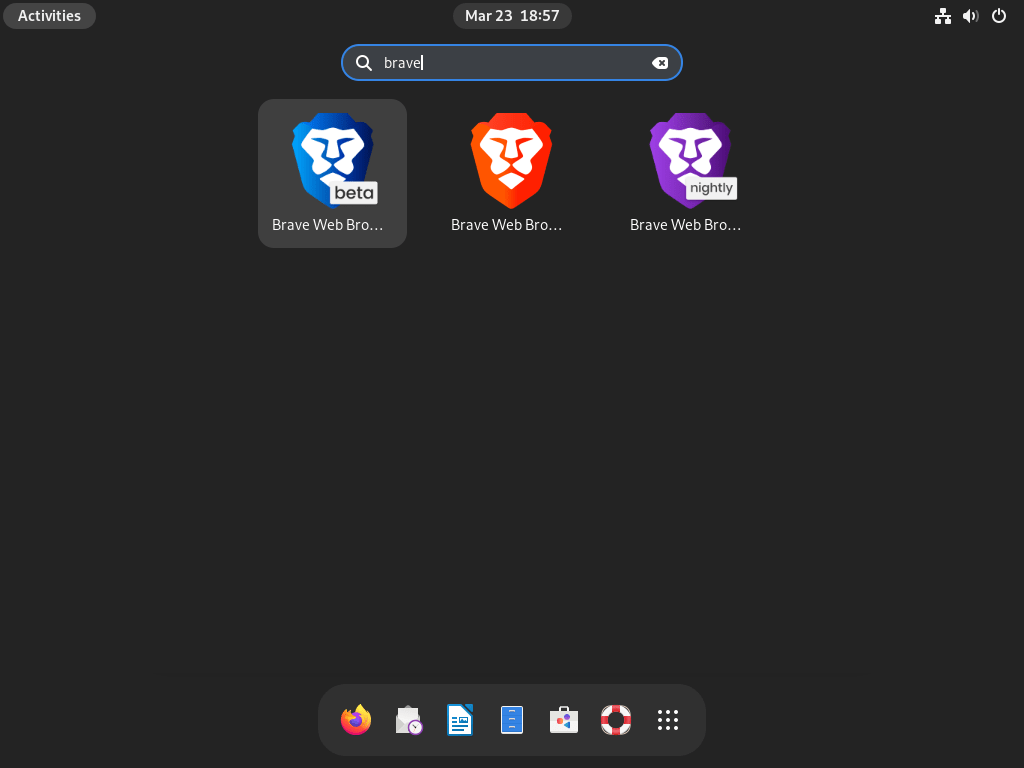
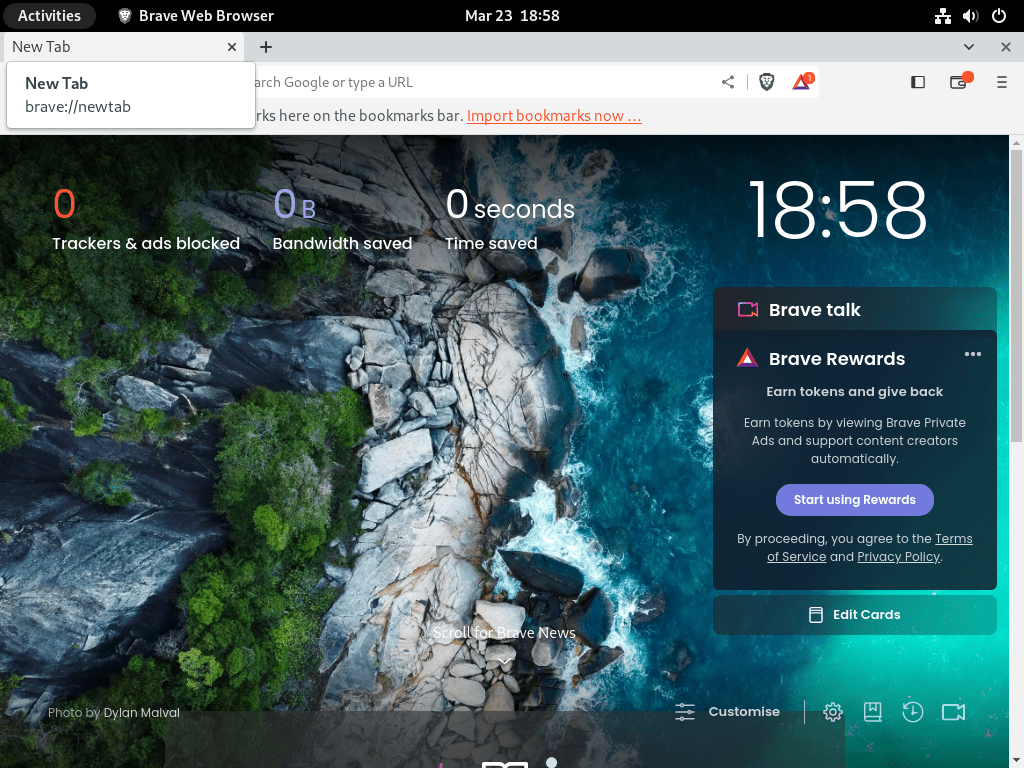
Open your desktop launcher, search for Brave, and start the browser from the application entry created by the package you installed.
Launch Brave Browser from the Terminal
Use the launcher command that matches the package you installed:
brave-browser
brave-browser-beta
brave-browser-nightly
flatpak run com.brave.Browser
Troubleshoot Brave Browser on Debian
Most Brave installation problems on Debian come down to repository files, package visibility, or graphical-session issues after an otherwise successful install.
Fix Brave Browser Repository Errors on Debian
APT signature failures or missing-source errors usually mean the Brave key file or the DEB822 source file is missing, renamed, or pointing at the wrong key path.
grep -E '^(URIs|Suites|Components|Architectures|Signed-By):' /etc/apt/sources.list.d/brave-browser-release.sourcesURIs: https://brave-browser-apt-release.s3.brave.com Suites: stable Components: main Architectures: amd64 arm64 Signed-By: /usr/share/keyrings/brave-browser-archive-keyring.gpg
If the file is missing or the Signed-By line points somewhere else, download fresh stable repository files:
curl -fsSLo brave-browser-archive-keyring.gpg https://brave-browser-apt-release.s3.brave.com/brave-browser-archive-keyring.gpg
curl -fsSLo brave-browser-release.sources https://brave-browser-apt-release.s3.brave.com/brave-browser.sources
Replace the APT files:
sudo install -m 0644 brave-browser-archive-keyring.gpg /usr/share/keyrings/brave-browser-archive-keyring.gpg
sudo install -m 0644 brave-browser-release.sources /etc/apt/sources.list.d/brave-browser-release.sources
rm -f brave-browser-archive-keyring.gpg brave-browser-release.sources
sudo apt update
Fix Brave Browser Package Detection on Debian
When APT says it cannot locate brave-browser, the Brave repository usually did not load during the last package index refresh.
apt-cache policy brave-browser | sed -n '1,6p'brave-browser:
Installed: (none)
Candidate: 1.90.124
Version table:
1.90.124 500
500 https://brave-browser-apt-release.s3.brave.com stable/main amd64 Packages
If the candidate is (none), rerun the repository download commands, make sure the source file still points at https://brave-browser-apt-release.s3.brave.com, and then run sudo apt update again.
Fix Brave Keyring Metadata Warnings on Debian
If you enable stable, beta, and nightly sources together, APT can warn that the sources disagree on hashes for the same brave-keyring version. The packages can still install, but the warning means you should remove channel source files you no longer need instead of leaving every Brave repository enabled indefinitely.
ls /etc/apt/sources.list.d/brave-browser*.sources/etc/apt/sources.list.d/brave-browser-beta.sources /etc/apt/sources.list.d/brave-browser-nightly.sources /etc/apt/sources.list.d/brave-browser-release.sources
For a stable-only install, remove the preview-channel source files and refresh APT:
sudo rm -f /etc/apt/sources.list.d/brave-browser-beta.sources /etc/apt/sources.list.d/brave-browser-nightly.sources
sudo apt update
Fix Brave Browser Launch Problems on Debian
A successful package install does not guarantee that the current session can open a graphical browser window. Debian 13, 12, and 11 do not normally expose the Ubuntu-style kernel.apparmor_restrict_unprivileged_userns knob, and the Brave packages do not install package-owned AppArmor profile files, so start with display and GPU checks before chasing Ubuntu-specific sandbox advice.
echo "$XDG_SESSION_TYPE"
brave-browser --disable-gpu
If you launched the command from SSH, reconnect to a local desktop session and try again there. When --disable-gpu fixes the launch, the next step is updating your graphics stack or keeping that flag in a temporary launcher override while you isolate the driver issue.
Update or Remove Brave Browser on Debian
APT and Flatpak both keep Brave manageable after the initial install, so updates and removals are straightforward once you stick to the same package source.
Update Brave Browser on Debian APT Installs
Refresh package metadata, then upgrade the stable package if you installed Brave from the official APT repository:
sudo apt update
sudo apt install --only-upgrade brave-browser -y
If you already configured Brave Beta or Brave Nightly from Brave’s preview-channel pages, run the same command with brave-browser-beta or brave-browser-nightly instead.
Update Brave Browser on Debian Flatpak Installs
Flatpak updates the Flathub build independently from APT:
sudo flatpak update com.brave.Browser -yRemove Brave Browser from Debian APT Installs
Remove Brave’s APT packages explicitly instead of using a broad apt autoremove command. The brave-keyring package owns the Brave keyring files after installation, so purge it only when you are removing every Brave APT channel from the system.
dpkg-query -W -f='${db:Status-Abbrev} ${binary:Package}\n' brave-browser brave-browser-beta brave-browser-nightly 2>/dev/null | awk '/^(ii|rc)/ {print $2}' | xargs -r sudo apt purge -y
if dpkg-query -W -f='${db:Status-Abbrev}\n' brave-keyring 2>/dev/null | grep -Eq '^(ii|rc)'; then
    sudo apt purge -y brave-keyring
fi
This command purges Brave browser packages from the stable, beta, or nightly APT channels when they are installed or left in residual-config state, then purges the shared keyring package only when that package is still present. If you intentionally want to keep a preview channel, purge only the package you no longer want and keep brave-keyring installed until all Brave APT packages are gone.
Delete the Brave source files, then refresh APT so Debian drops the Brave package candidates cleanly:
sudo rm -f /etc/apt/sources.list.d/brave-browser-release.sources
sudo rm -f /etc/apt/sources.list.d/brave-browser-beta.sources
sudo rm -f /etc/apt/sources.list.d/brave-browser-nightly.sources
sudo apt update
If a failed setup left a manually downloaded keyring behind before brave-keyring was installed, remove the matching stale keyring file after confirming no Brave APT source still references it.
Check that no Brave APT package remains installed or in residual-config state:
dpkg-query -W -f='${db:Status-Abbrev} ${binary:Package}\n' brave-browser brave-browser-beta brave-browser-nightly brave-keyring 2>/dev/null | grep -E '^(ii|rc)' || echo "no Brave APT packages remain"no Brave APT packages remain
Remove Brave Browser from Debian Flatpak Installs
Remove the Flathub build with its app ID, then confirm that the application no longer appears in the installed app list:
sudo flatpak remove com.brave.Browser -y
flatpak list --app | grep -F com.brave.Browser || echo "not installed"
not installed
Conclusion
Brave Browser is ready on Debian through either Brave’s official APT repository or the Flathub build, and the update and removal paths stay clean once each package source remains separate. If you want to compare it with other daily browsers, you can install Firefox on Debian, install Chromium Browser on Debian, or install Vivaldi Browser on Debian.


Formatting tips for your comment
You can use basic HTML to format your comment. Useful tags currently allowed in published comments:
<code>command</code>command<strong>bold</strong><em>italic</em><a href="https://example.com">link</a><blockquote>quote</blockquote>