
SMPlayer is a free media player for Linux with built-in codecs that play virtually every video and audio format, with no extra codec packs needed. It uses MPlayer or mpv as its backend, remembers playback settings per file so you resume exactly where you left off, and supports subtitle downloading, YouTube streaming, and a customizable interface with themes and skin support. Install SMPlayer on Ubuntu using the method in the comparison table below that fits your release and preferences. For media player alternatives, see how to install VLC on Ubuntu or how to install MPV on Ubuntu.
Choose Your SMPlayer Installation Method for Ubuntu
SMPlayer is available through four channels on Ubuntu. Each differs in version freshness, update behavior, and isolation level.
| Method | Channel | Version | Updates | Best For |
|---|---|---|---|---|
| APT (Ubuntu repos) | Ubuntu Universe | Distribution default | sudo apt upgrade | Most users, stable system integration |
| APT (PPA) | Launchpad PPA | Latest stable | sudo apt upgrade | 22.04/24.04 users needing a newer build |
| Flatpak | Flathub | Latest stable | flatpak update | Sandboxed install, all Ubuntu LTS versions |
| Snap | Snap Store | Latest stable | Automatic / sudo snap refresh | Auto-updating preference |
Default SMPlayer versions shipped by Ubuntu differ per release. The alex-p PPA provides a newer build on 22.04 and 24.04, but is not available for 26.04.
| Ubuntu Release | APT Default | PPA Available | PPA Version |
|---|---|---|---|
| 26.04 LTS (Resolute) | 25.6.x | No | — |
| 24.04 LTS (Noble) | 23.12.x | Yes | 24.05.x |
| 22.04 LTS (Jammy) | 21.10.x | Yes | 24.05.x |
These steps cover Ubuntu 26.04 LTS, 24.04 LTS, and 22.04 LTS. The alex-p PPA only builds packages for 22.04 (jammy) and 24.04 (noble); Ubuntu 26.04 users should install from the Ubuntu repository, Flatpak, or Snap instead. All other methods work identically across all three supported LTS releases.
Install SMPlayer on Ubuntu via APT
Update Ubuntu Before SMPlayer Installation
Update your system package list and upgrade any pending packages before installing SMPlayer:
sudo apt update && sudo apt upgradeNew to
sudo? See our guide on how to add a user to sudoers on Ubuntu if the commands below return permission errors.
Install SMPlayer via APT Command
Option 1: Install from the Ubuntu Repository
Installing from the Ubuntu Universe repository is the simplest method and the most integrated with your system. The package version depends on your Ubuntu release; see the version table above. Ubuntu 26.04 ships a current build (25.6.x), so no PPA is needed. On 22.04 and 24.04, the repository version is older; use Option 2 to get the latest release.
sudo apt install smplayer smplayer-themes -yConfirm the installed version:
apt-cache policy smplayersmplayer:
Installed: 25.6.0+ds0-1
Candidate: 25.6.0+ds0-1
Version table:
*** 25.6.0+ds0-1 500
500 http://archive.ubuntu.com/ubuntu resolute/universe amd64 Packages
Option 2: Install via PPA (Ubuntu 22.04 and 24.04 Only)
The alex-p SMPlayer PPA provides SMPlayer 24.05.x for Ubuntu 22.04 (Jammy) and 24.04 (Noble). It is actively maintained, with packages updated in February 2026.
Ubuntu 26.04 users: the alex-p PPA does not publish Resolute packages. Ubuntu 26.04 is a recent release, and no newer SMPlayer version has shipped since its launch, so the PPA offers no benefit over the Ubuntu repository on this release. The Ubuntu repository already ships SMPlayer 25.6.x, the current stable build. Use Option 1 for the simplest path; Flatpak and Snap are also available if you prefer a sandboxed install.
Add the PPA:
sudo add-apt-repository ppa:alex-p/smplayer -yRefresh the package list to include the new PPA index:
sudo apt updateInstall SMPlayer and the themes pack from the PPA:
sudo apt install smplayer smplayer-themes -yConfirm the installed version with apt-cache policy:
apt-cache policy smplayerExpected output on Ubuntu 24.04 with the PPA active:
smplayer:
  Installed: 1:24.05.0+git10392-87f76cba8-1ppa1~noble1
  Candidate: 1:24.05.0+git10392-87f76cba8-1ppa1~noble1
  Version table:
 *** 1:24.05.0+git10392-87f76cba8-1ppa1~noble1 500
        500 https://ppa.launchpadcontent.net/alex-p/smplayer/ubuntu noble/main amd64 Packages
     23.12.0+ds0-1build2 500
        500 http://archive.ubuntu.com/ubuntu noble/universe amd64 Packages
Install SMPlayer on Ubuntu via Flatpak and Flathub
Flatpak delivers the latest SMPlayer release in a sandboxed environment and works on all Ubuntu LTS versions, including 26.04 where the PPA is unavailable.
Flatpak is not installed by default on Ubuntu. Follow our guide to install Flatpak on Ubuntu before continuing with the commands below.
Enable Flathub on Ubuntu for SMPlayer
Add Flathub as a Flatpak remote if it is not already configured:
sudo flatpak remote-add --if-not-exists flathub https://flathub.org/repo/flathub.flatpakrepoInstall SMPlayer on Ubuntu via Flatpak Command
Install SMPlayer from Flathub using its app ID info.smplayer.SMPlayer:
flatpak install flathub info.smplayer.SMPlayer -yConfirm the installation:
flatpak info info.smplayer.SMPlayer | grep VersionVersion: 25.6.0
Install SMPlayer on Ubuntu via Snap
Snap is pre-installed on Ubuntu. Install SMPlayer directly from the Snap Store:
sudo snap install smplayerConfirm the installation:
snap list smplayerName Version Rev Tracking Publisher Notes smplayer 25.6.0 2153 latest/stable rvramos -
Snap packages refresh automatically in the background, so no manual update step is required under normal use.
Launch SMPlayer on Ubuntu
Launch SMPlayer from the Terminal
For APT installs, launch SMPlayer with:
smplayerFor Flatpak or Snap installs, use the command that matches your installation method:
flatpak run info.smplayer.SMPlayersnap run smplayerLaunch SMPlayer from the Applications Menu
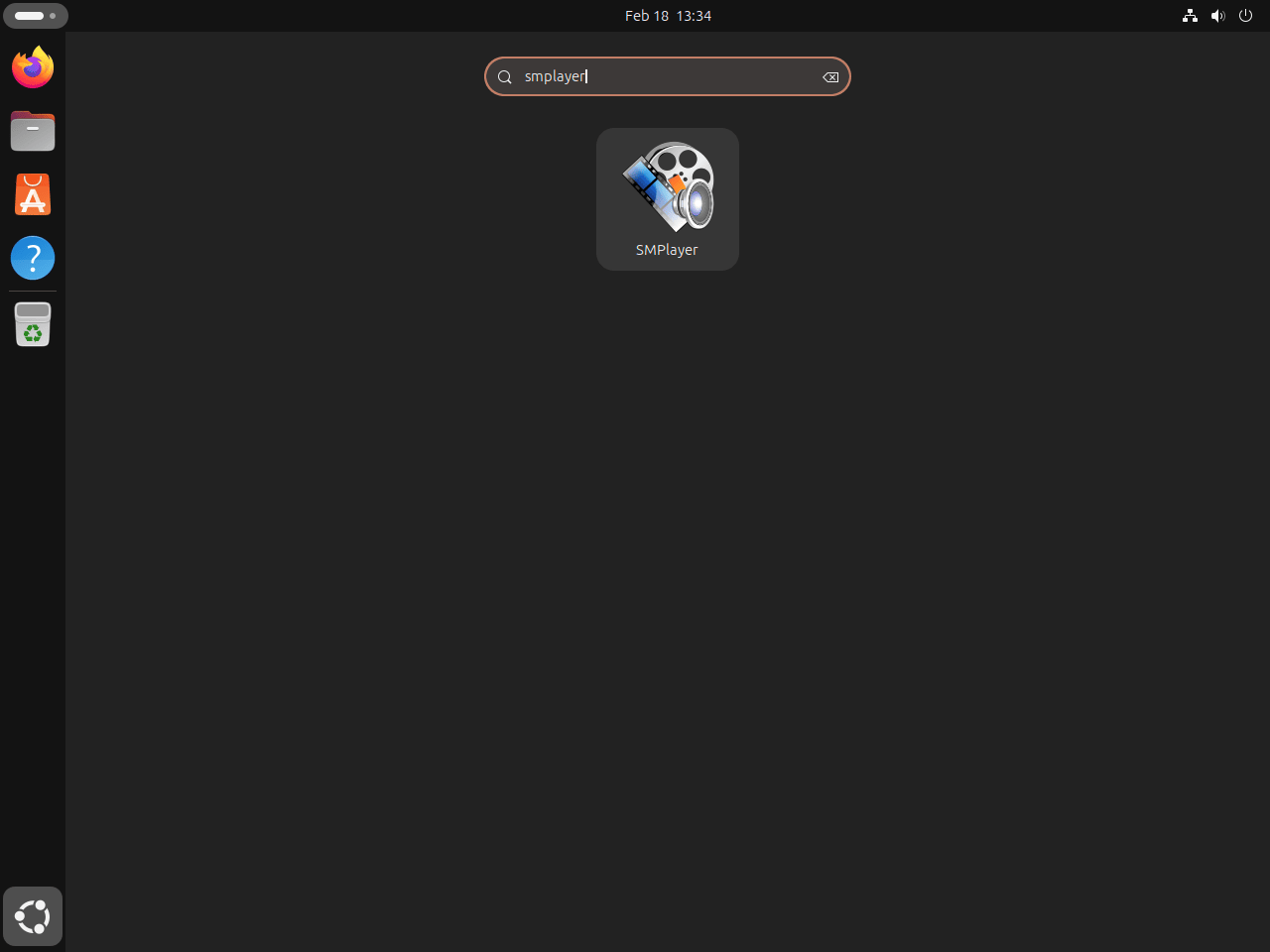
On GNOME, open the Activities overlay and search for SMPlayer, or navigate to:
Activities > Show Applications > SMPlayer
First-Time Tips with SMPlayer on Ubuntu
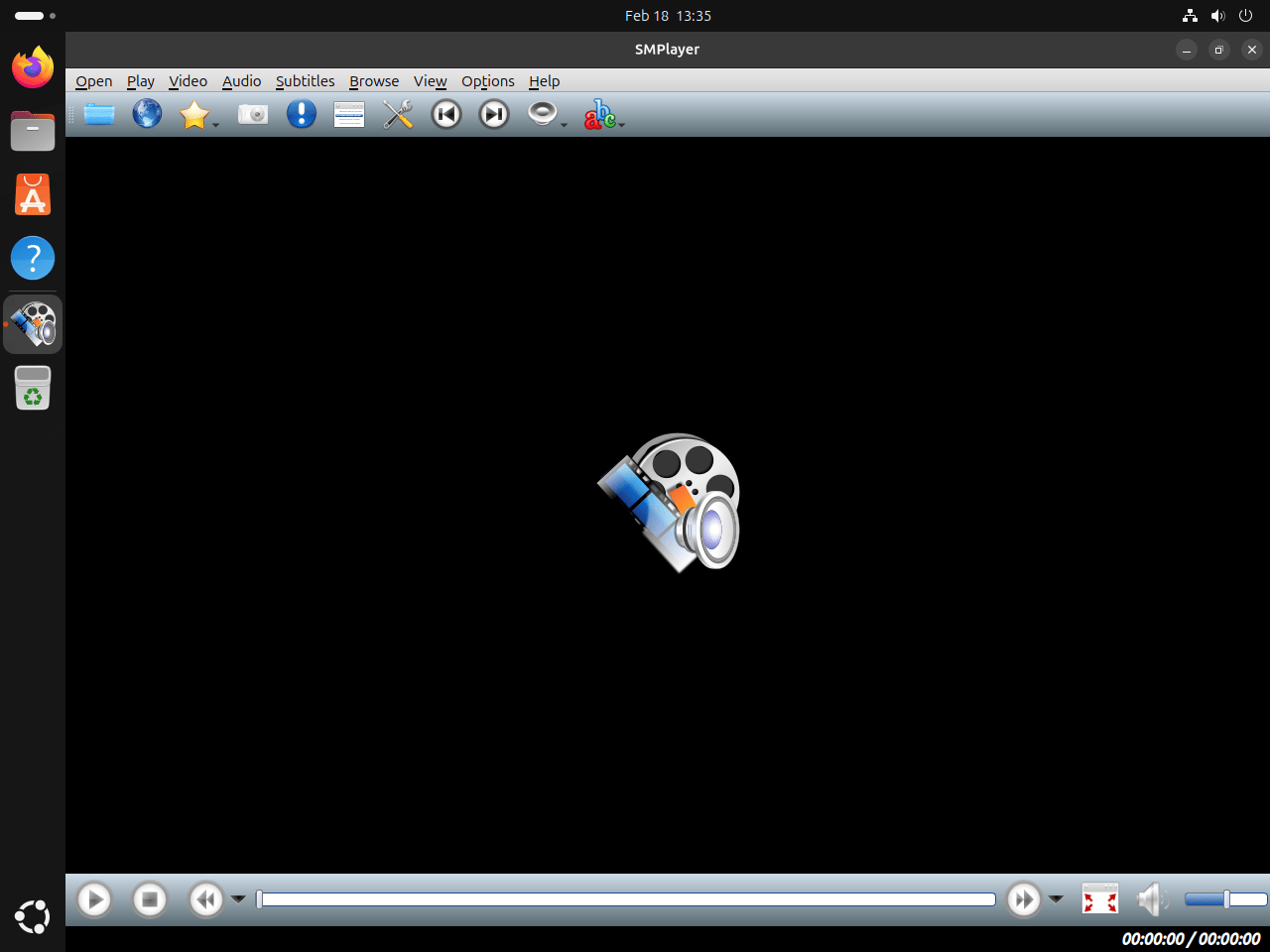
General SMPlayer Tips for New Users
- Explore Preferences: Go to
Options>Preferencesto adjust video, audio, subtitle, and interface settings all in one place. - Set Interface Language: Under
Options>Preferences>Interface, choose your display language from a long list of supported locales. - Adjust Playback on the Fly: Right-click the video during playback to switch audio tracks, adjust subtitle timing, or change the aspect ratio without opening Preferences.
Customizing SMPlayer on Ubuntu
- Change Themes and Icons: Go to
Options>Preferences>Interfaceto select different themes and icon sets. If you installedsmplayer-themes, additional options appear here. - Configure Output Drivers: Under
Options>Preferences>General, try different video and audio output drivers to find what performs best on your hardware. - Remap Keyboard Shortcuts: Visit
Options>Preferences>Keyboard and mouseto assign custom bindings for any action. - Tune Subtitles: In
Options>Preferences>Subtitles, adjust font, size, and color so text stays readable over any video background.
SMPlayer Keyboard Shortcuts
- Toggle Fullscreen: Press
Fto switch between fullscreen and windowed mode. - Pause / Play: Press the spacebar.
- Adjust Volume: Use the
UpandDownarrow keys. - Seek Through Video: Use the
LeftandRightarrow keys to jump backward or forward in small increments.
Other Useful SMPlayer Tips
- Audio Equalizer: Go to
Audio>Equalizerto adjust frequency bands for a custom sound profile. - Play YouTube Videos: Use
Open>URLand paste a YouTube link. SMPlayer streams it directly. - Capture Screenshots: Press
Sduring playback to save a still image. Configure the output directory underOptions>Preferences>General>Screenshot. - Advanced Backend Options: Add custom MPlayer/mpv flags under
Options>Preferences>Advancedfor granular playback control.
Manage SMPlayer on Ubuntu
Update SMPlayer on Ubuntu
APT – Update SMPlayer
To update only SMPlayer without upgrading the entire system, use the targeted install command:
sudo apt install --only-upgrade smplayer smplayer-themesFlatpak – Update SMPlayer
flatpak updateSnap – Update SMPlayer
Snap refreshes automatically in the background. To trigger a manual update:
sudo snap refresh smplayerRemove SMPlayer from Ubuntu
APT – Remove SMPlayer
sudo apt remove smplayer smplayer-themesThe command above removes the SMPlayer packages but leaves configuration files in ~/.config/smplayer/. To also remove all saved preferences, playback history, and per-file settings:
rm -rf ~/.config/smplayerIf you added the alex-p PPA and no longer need it, remove it as well:
sudo add-apt-repository --remove ppa:alex-p/smplayer -yFlatpak – Remove SMPlayer
flatpak uninstall --delete-data info.smplayer.SMPlayerSnap – Remove SMPlayer
sudo snap remove smplayerFrequently Asked Questions About SMPlayer on Ubuntu
Ubuntu 26.04 (Resolute) ships SMPlayer 25.6.x directly from the Universe repository, which is the current stable release. The alex-p PPA has no Resolute build, so APT from the Ubuntu repository is the simplest choice. Flatpak works on all Ubuntu LTS versions including 26.04 if you prefer a sandboxed install.
Yes. SMPlayer delegates hardware decoding to its backend (MPlayer or mpv). Go to Options > Preferences > General > Video and select a hardware-accelerated output driver such as vdpau (NVIDIA) or vaapi (Intel/AMD). The correct driver depends on your GPU and the installed driver stack.
Pass the file path as an argument: smplayer /path/to/video.mp4. For Flatpak, use flatpak run info.smplayer.SMPlayer /path/to/video.mp4. SMPlayer opens and starts playback immediately, restoring any saved settings for that file.
Conclusion
SMPlayer is installed on Ubuntu and ready to handle your media files. Ubuntu 26.04 ships a current SMPlayer build from the repository, while 22.04 and 24.04 users can add the alex-p PPA to get a newer release. Flatpak provides a sandboxed alternative that works across all LTS versions, and Snap keeps itself up to date automatically. For media player alternatives with a different feature set, explore VLC on Ubuntu for broad format support or MPV on Ubuntu for a minimalist high-performance player.

Formatting tips for your comment
You can use basic HTML to format your comment. Useful tags currently allowed in published comments:
<code>command</code>command<strong>bold</strong><em>italic</em><blockquote>quote</blockquote>