
Jumping between Windows RDP hosts, Linux SSH systems, VNC desktops, and VM consoles gets messy fast. Remmina keeps those sessions in one GTK app, and to install Remmina on Fedora you can choose the Fedora package or the Flathub build.
DNF is the better default because Fedora packages Remmina directly and updates it with normal system upgrades. Flatpak is useful when you want Flathub’s app/runtime update path or a newer upstream build, but the permission model needs a closer look before you treat it as safer.
Install Remmina on Fedora Linux
Choose a Remmina Installation Method on Fedora
Use this quick comparison table to pick the installation path that matches your update and packaging preference.
| Method | Source or Channel | Update Behavior | Best For | Trade-offs |
|---|---|---|---|---|
| DNF | Fedora repositories | Updates with sudo dnf upgrade --refresh | Most Fedora Workstation users | Fedora package stream may lag Flathub slightly |
| Flatpak | Flathub | Updates with sudo flatpak update org.remmina.Remmina | Users who want the Flathub app stream or newer upstream build | Broad permissions; not a stronger isolation choice for this app |
Start with DNF unless you specifically need the newer Flathub build. Flathub currently shows Remmina as verified, but also labels it potentially unsafe because it requests broad access such as home-directory, device, SSH agent, printing, and desktop-session permissions.
Method 1: Install Remmina on Fedora with DNF
Refresh package metadata first so you install against current Fedora repositories.
sudo dnf upgrade --refreshThese commands use
sudowhen root privileges are required. If your account does not have sudo access yet, follow our guide to add a user to sudoers on Fedora.
Install Remmina with the RDP and VNC plugin packages. Fedora publishes those protocol plugins as separate subpackages, so installing them with the desktop client avoids a common “installed but cannot connect” problem later.
sudo dnf install -y remmina remmina-plugins-rdp remmina-plugins-vncThe -y flag auto-confirms prompts. Remove it if you want to review the transaction details before installation continues.
For dedicated kiosk or login-session workflows, you can also install the optional GNOME session package:
sudo dnf install -y remmina-gnome-sessionVerify the package set is installed:
rpm -q remmina remmina-plugins-rdp remmina-plugins-vncremmina-1.4.41-2.fc44.x86_64 remmina-plugins-rdp-1.4.41-2.fc44.x86_64 remmina-plugins-vnc-1.4.41-2.fc44.x86_64
Install Optional Remmina Plugins on Fedora
Add optional plugins only for the workflows you actually use:
remmina-plugins-secretfor GNOME Keyring credential storageremmina-plugins-kwalletfor KDE Wallet credential storageremmina-plugins-spicefor SPICE virtual machine sessionsremmina-plugins-wwwfor embedded web contentremmina-plugins-x2gofor X2Go session support
Install the plugin set you need. Example:
sudo dnf install -y remmina-plugins-secret remmina-plugins-spice remmina-plugins-x2goMethod 2: Install Remmina on Fedora from Flathub (Flatpak)
Fedora Workstation already includes Flatpak. On Fedora Server or minimal installations, install it first:
sudo dnf install -y flatpakAdd Flathub as a system remote. The dl.flathub.org descriptor is Flathub’s current repository file URL.
sudo flatpak remote-add --if-not-exists flathub https://dl.flathub.org/repo/flathub.flatpakrepoVerify remotes before installing Remmina:
flatpak remotesfedora system,oci flathub system
Install Remmina from Flathub:
sudo flatpak install -y flathub org.remmina.RemminaVerify the Flatpak installation details:
flatpak info org.remmina.Remmina | grep -E '^Version:|^Installation:'The grep -E filter trims the output to only the lines you care about. For additional filtering patterns, see our grep command guide.
Version: 1.4.43
Installation: system
Launch Remmina on Fedora Linux
Launch Remmina from Terminal
Use the command that matches your installation method:
remminaflatpak run org.remmina.RemminaLaunch Remmina from Fedora Activities
Both methods add a desktop launcher automatically.
- Open Activities.
- Search for
Remmina. - Select the Remmina icon to start the client.
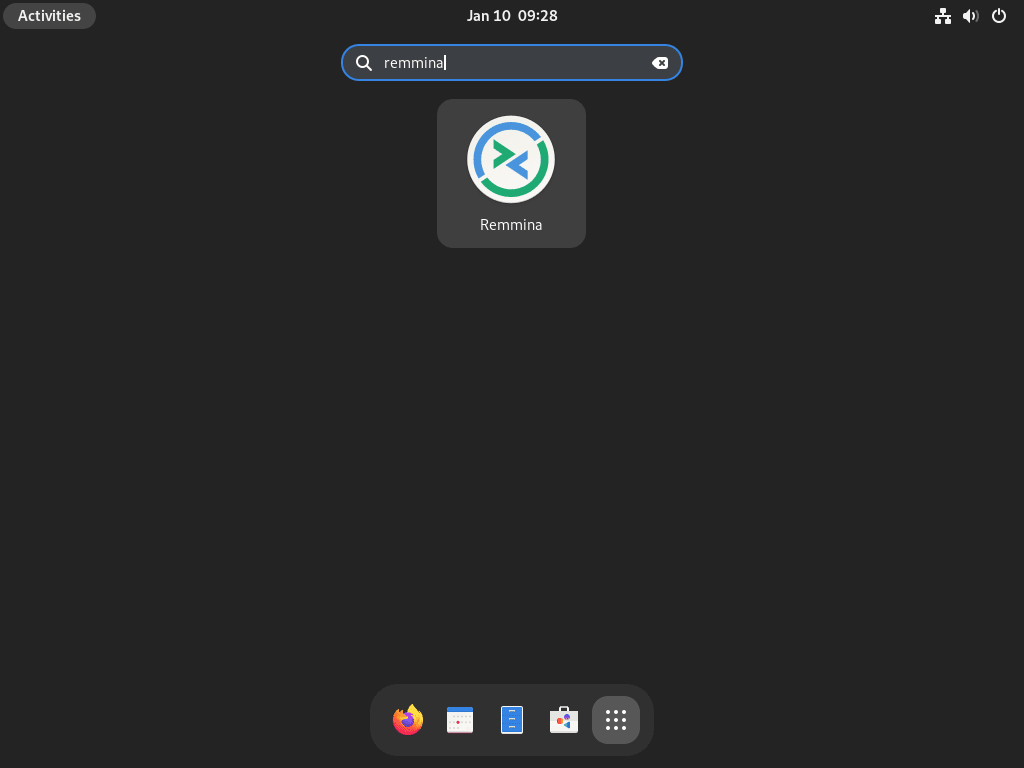
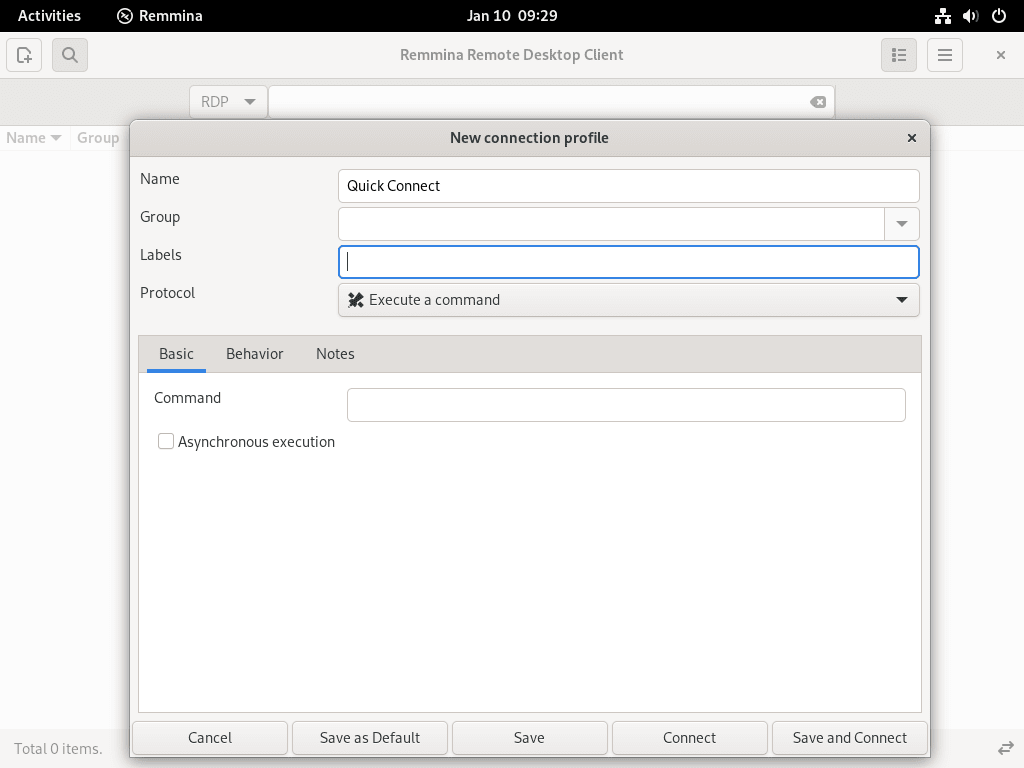
Manage Remmina on Fedora Linux
Update Remmina on Fedora
Run the update command for your chosen installation method.
sudo dnf upgrade --refreshsudo flatpak update org.remmina.RemminaRemove Remmina from Fedora
For DNF installations, remove the desktop client and baseline protocol plugins:
sudo dnf remove remmina remmina-plugins-rdp remmina-plugins-vncIf you installed the example optional package set, run this combined remove command instead. For any different plugin set, remove only the package names you installed.
sudo dnf remove remmina remmina-plugins-rdp remmina-plugins-vnc remmina-plugins-secret remmina-plugins-spice remmina-plugins-x2go remmina-gnome-sessionFor Flatpak installations, remove the app from the same system scope used during installation:
The
--delete-dataflag permanently removes saved profiles, credentials, and preferences from~/.var/app/org.remmina.Remmina/. Back up that directory first if you need to keep your connection data.
sudo flatpak uninstall --delete-data org.remmina.RemminaOptional cleanup for unused Flatpak runtimes:
sudo flatpak uninstall --unusedTroubleshoot Remmina on Fedora Linux
Remmina Does Not Launch on Fedora
If Remmina is installed but does not open, check both package state and runtime output for your installation method.
# DNF method
rpm -q remmina
command -v remmina

# Flatpak method
flatpak info org.remmina.Remmina | grep -E '^Version:|^Installation:'
flatpak run org.remmina.Remmina --version
remmina-1.4.41-2.fc44.x86_64 /usr/bin/remmina Version: 1.4.43 Installation: system org.remmina.Remmina - 1.4.43 (git 7be0cf234)
If you run launch commands over SSH without an active graphical session, GTK can throw display errors and Remmina will not open. Launch it from the local desktop session in Activities, or connect to the machine with a graphical remote session first.
Remmina Command Not Found After DNF Installation
If the shell cannot find Remmina after installation, the base package may not have installed cleanly or the shell may still be using stale command lookup state.
bash: remmina: command not found
Clear the shell command cache, reinstall the package and core protocol plugins, then verify:
hash -r
sudo dnf install -y remmina remmina-plugins-rdp remmina-plugins-vnc
rpm -q remmina remmina-plugins-rdp remmina-plugins-vnc
remmina-1.4.41-2.fc44.x86_64 remmina-plugins-rdp-1.4.41-2.fc44.x86_64 remmina-plugins-vnc-1.4.41-2.fc44.x86_64
Flathub Remote Disabled Error During Remmina Flatpak Installation
A disabled Flathub remote causes Flatpak installs to fail even when the remote exists.
error: Unable to load summary from remote flathub: Can't fetch summary from disabled remote 'flathub'
Re-enable Flathub and verify the remote list:
sudo flatpak remote-modify --enable flathub
flatpak remotes
fedora system,oci flathub system
Alternative Remote Desktop Clients Besides Remmina on Fedora Linux
If you need a proprietary remote desktop stack with vendor-managed account workflows, compare the options below before switching from Remmina.
| Product | Official Fedora Channel | Update Path | License Model | Best For |
|---|---|---|---|---|
| TeamViewer | TeamViewer Linux portal publishes Fedora RPM packages for Full Client and Host. | Manual update with new RPM downloads, or repo-based updates when using the repository method. | Proprietary (vendor EULA applies) | Support teams already standardized on TeamViewer workflows |
| AnyDesk | The AnyDesk RPM repository how-to includes a Fedora repository definition and install path. | Automatic updates through dnf when the RPM repo is configured, or manual RPM refreshes. | Proprietary (vendor terms apply) | Users who want a lightweight client with vendor RPM repository support |
For setup steps on Fedora, use these distro-specific guides:
If you want an open-source-first workflow, stay on Remmina and add only the plugins you actually use.
Conclusion
Remmina is installed on Fedora with the package source, launch path, update command, and cleanup path matched to the method you chose. For secure remote access, pair it with a hardened network setup using this firewalld on Fedora guide and this SSH on Fedora guide.


Formatting tips for your comment
You can use basic HTML to format your comment. Useful tags currently allowed in published comments:
<code>command</code>command<strong>bold</strong><em>italic</em><a href="https://example.com">link</a><blockquote>quote</blockquote>